Editor’s Note: Western North Carolina is rich with untold stories—many resting quietly in local cemeteries. In this Tombstone Tales series, we explore the lives of people from our region’s past whose legacies, whether widely known or nearly forgotten, helped shape the place we call home.
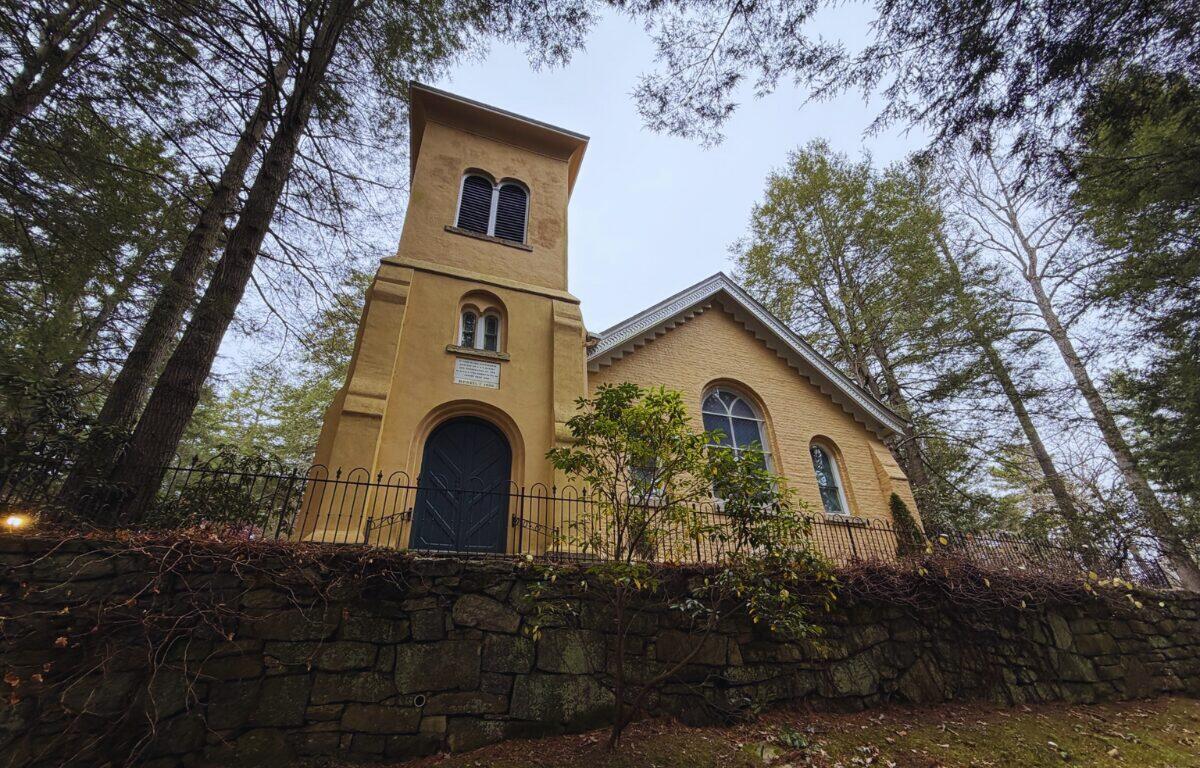
FLAT ROCK, N.C. (828newsNOW) — As the United States marks the 250th anniversary of the Declaration of Independence, a marble monument in Flat Rock offers a connection between Western North Carolina and one of the nation’s founding families. The grave marker at St. John in the Wilderness Cemetery belongs to Edward Rutledge, who died in 1856 at just 20 years old. His family name traces back to Edward Rutledge, the youngest signer of the Declaration of Independence and a future governor of South Carolina. Yet the monument’s most remarkable feature is the story of how a grieving family chose to remember a life cut short.
A name tied to the founding of a nation
Few names carried more influence in early South Carolina than Rutledge. Edward Rutledge, the Revolutionary-era statesman, signed the Declaration of Independence at age 26, making him the youngest signer of the document that established the United States. He later served as governor of South Carolina and became one of the most prominent political figures of the early republic.
The younger Edward Rutledge, buried in Flat Rock, was born April 12, 1836, into that distinguished family line. His parents, Frederick and Henrietta Rutledge, belonged to a family whose roots stretched deep into the political, legal and social history of South Carolina. By the mid-1800s, the Rutledges were among the wealthy Charleston families who spent summers in the mountains of Western North Carolina.
Their seasonal migration helped shape Flat Rock into what became known as the “Little Charleston of the Mountains.” Many of those families worshipped at St. John in the Wilderness and were buried in the church cemetery, creating one of the region’s most important collections of 19th-century Southern history.
A promising future interrupted
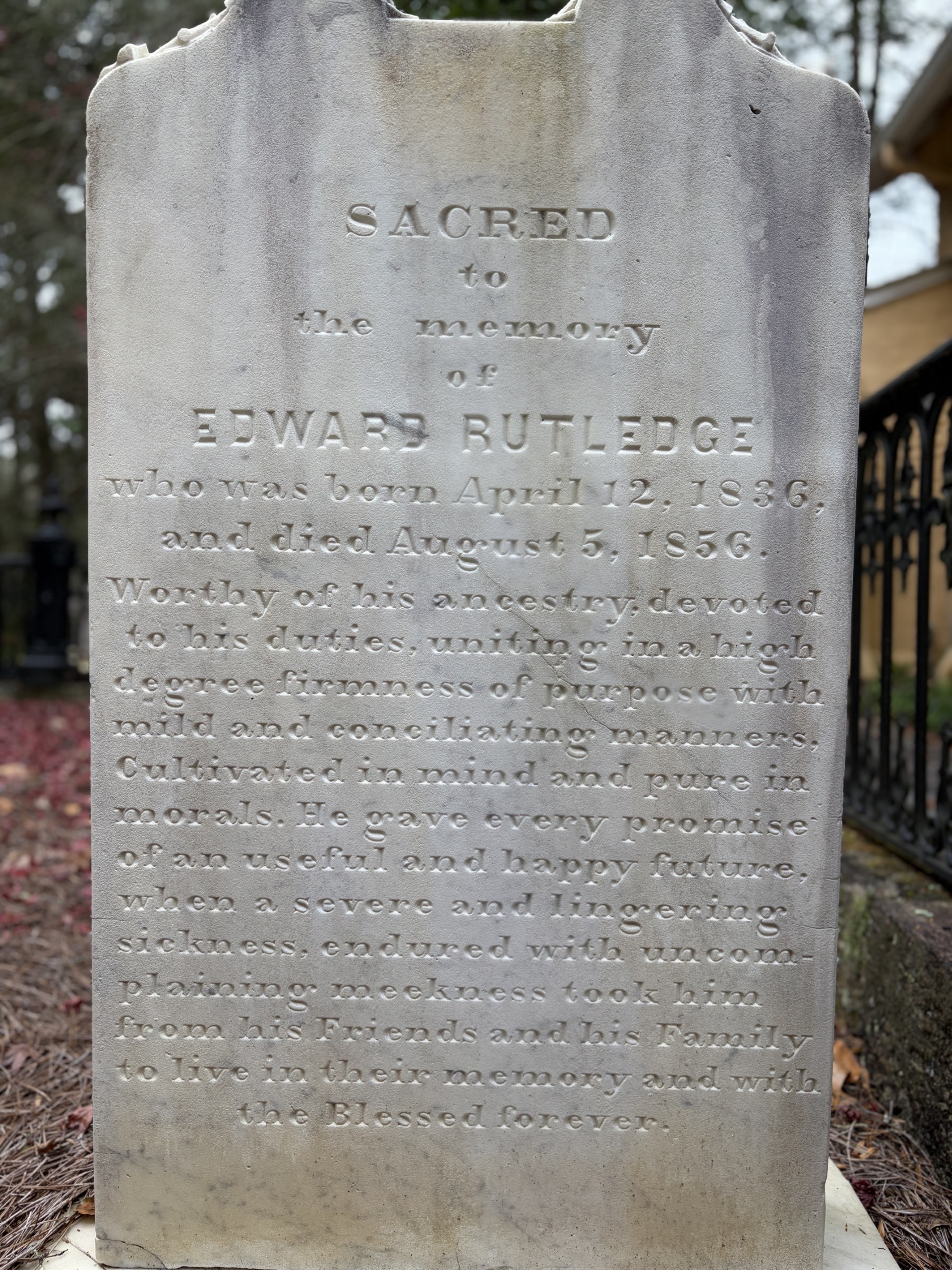
The front of Edward Rutledge’s monument reveals the hopes his family held for him. The inscription describes him as devoted to duty, firm in purpose and gentle in manner. It praises his education, character and morals before declaring him “worthy of his ancestry.” Then comes the line that defines the entire memorial: “He gave every promise of an useful and happy future.”
Unlike many historic monuments that celebrate accomplishments, this one mourns potential. The inscription notes that he endured a “severe and lingering sickness” with “uncomplaining meekness.” His family was left to imagine the future he never had the opportunity to live.
The words that endure
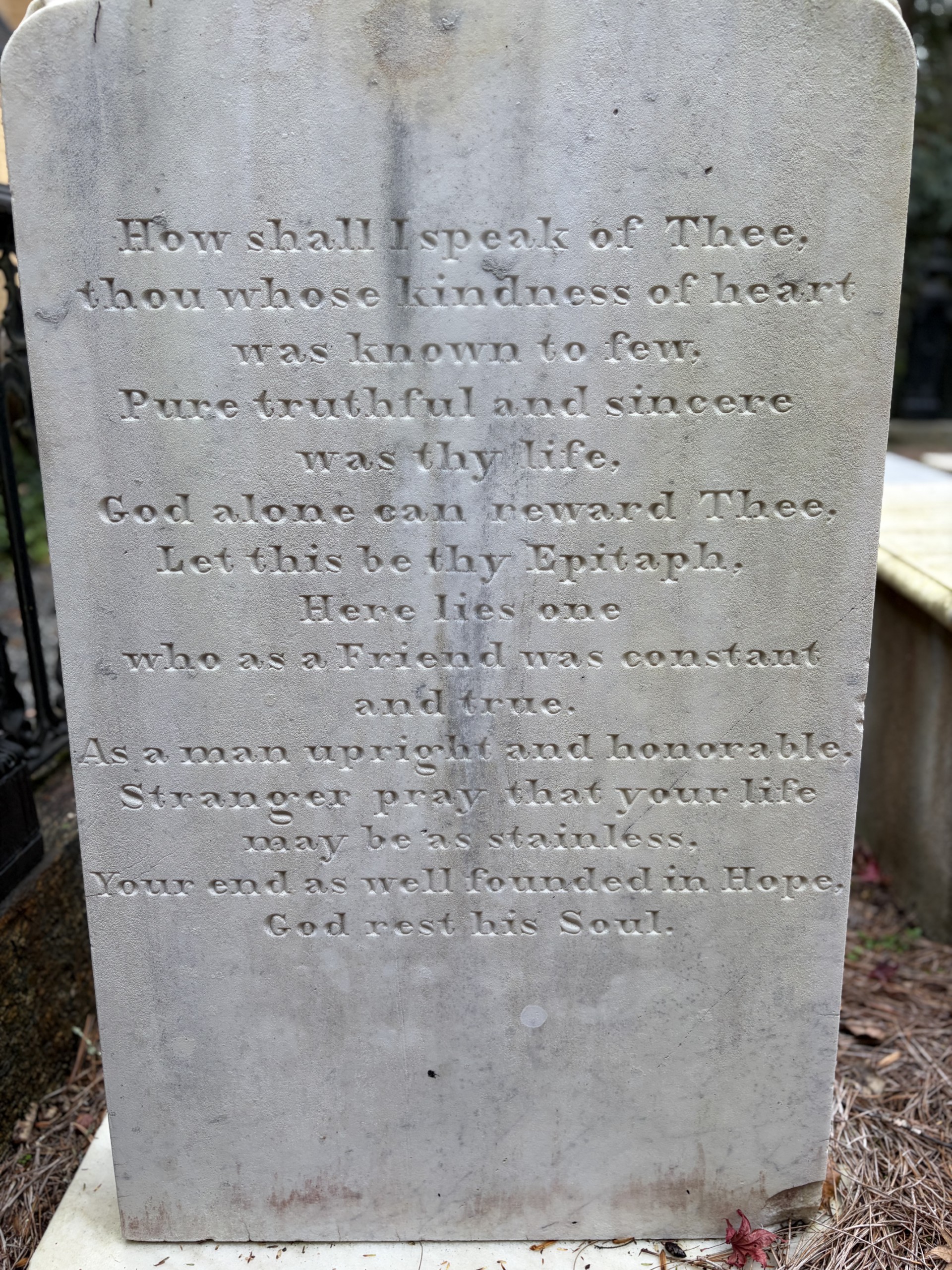
Visitors who walk around the monument discover a second inscription covering the reverse side. Rather than emphasizing ancestry or social standing, the epitaph focuses on the qualities that mattered most to those who knew him.
“How shall I speak of Thee, thou whose kindness of heart was known to few,
Pure truthful and sincere was thy life,
God alone can reward Thee,
Let this be thy Epitaph.”
The tribute continues:
“Here lies one who as a Friend was constant and true;
As a man upright and honorable.”
The words feel deeply personal. They read less like the reflections of someone struggling to express the loss of a beloved son, relative or friend.
A message across generations
The final lines transform the monument into something more than a family memorial. Instead of ending with a farewell to Edward, the inscription addresses every future visitor who might pause before the stone.
“Stranger pray that your life may be as stainless,
Your end as well founded in Hope,
God rest his Soul.”
Nearly 170 years later, those words still speak across generations. As communities across the country reflect on the people and events that shaped the United States during the nation’s 250th anniversary, Edward Rutledge’s grave offers a reminder that history is not only found in famous names and national milestones. Sometimes it is found in the quiet stories preserved in local cemeteries.
Edward Rutledge inherited a name connected to the founding of America. Yet the people who loved him chose not to define him by ancestry or status. Instead, they left behind a different legacy of kindness, loyalty, and, in their words, of a man who was “constant and true.”
-
Tombstone Tales: Flat Rock grave links to Declaration of Independence signer
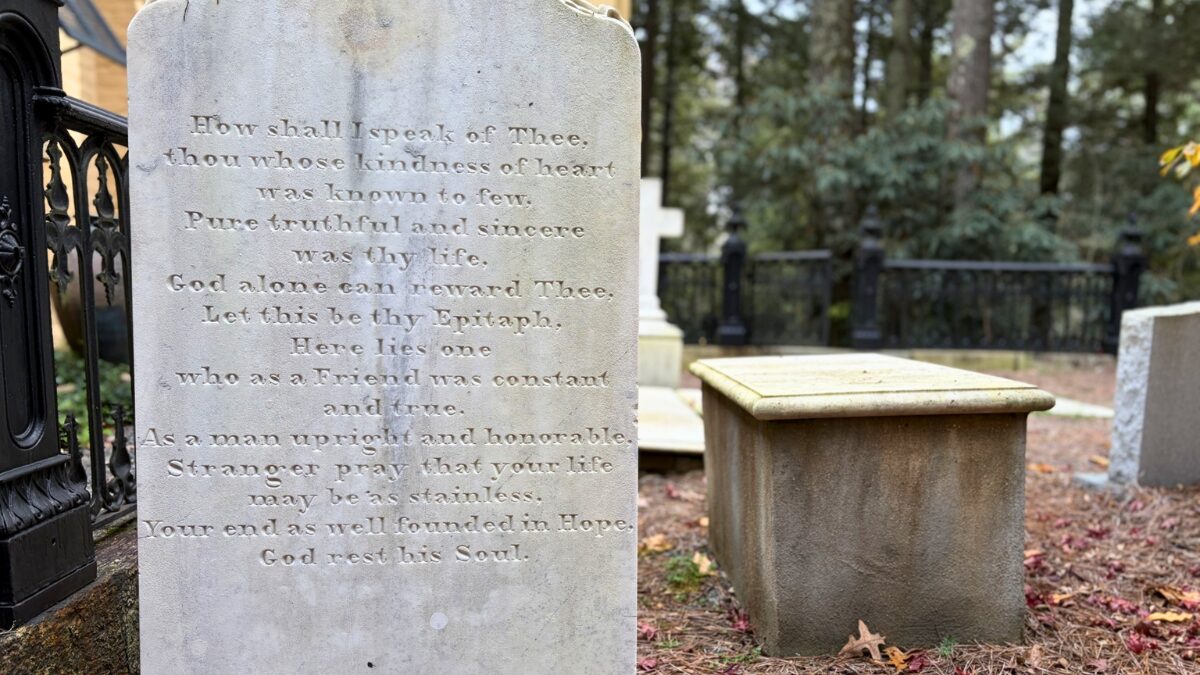
As America marks its 250th anniversary, a grave at St. John in the Wilderness Cemetery connects Flat Rock to one of the signers of the Declaration of Independence and a young man remembered not for his famous name, but for his character.
-
Tombstone Tales: Biltmore Estate stone was used to carve this historic Asheville cemetery angel
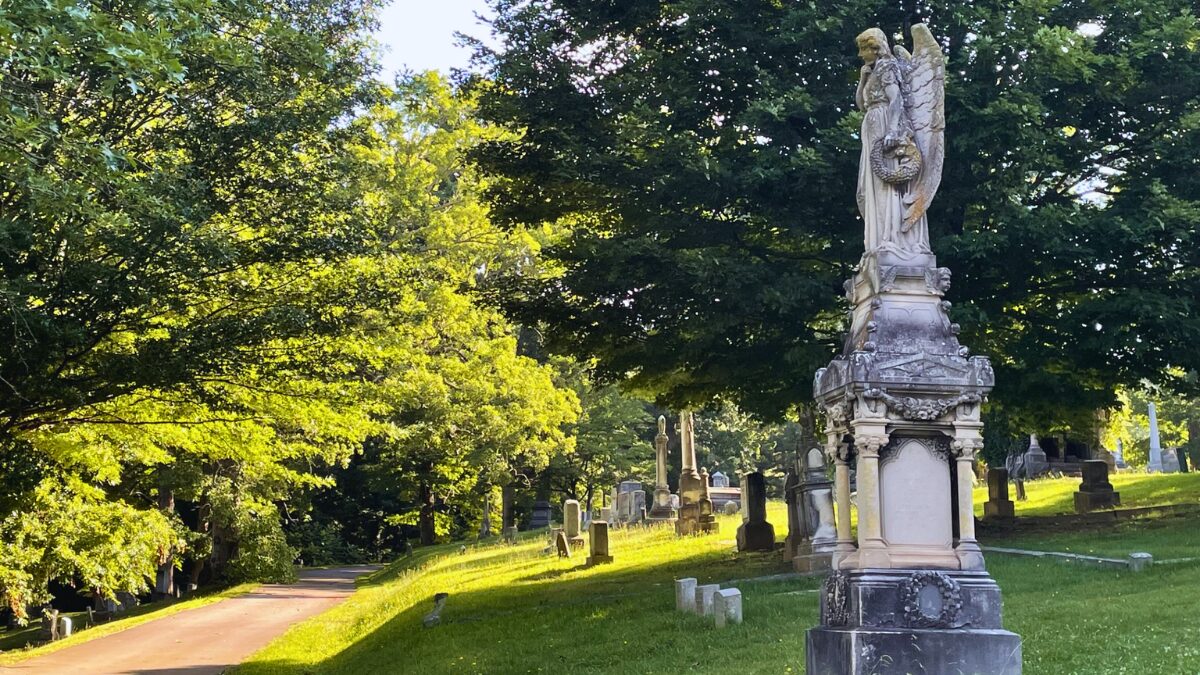
The Riverside Cemetery monument was carved by English stoneworker Fred Miles from limestone left over from Biltmore Estate’s construction.
-
Tombstone Tales: A World War I soldier’s grave in Buncombe County reflects meaning of Memorial Day
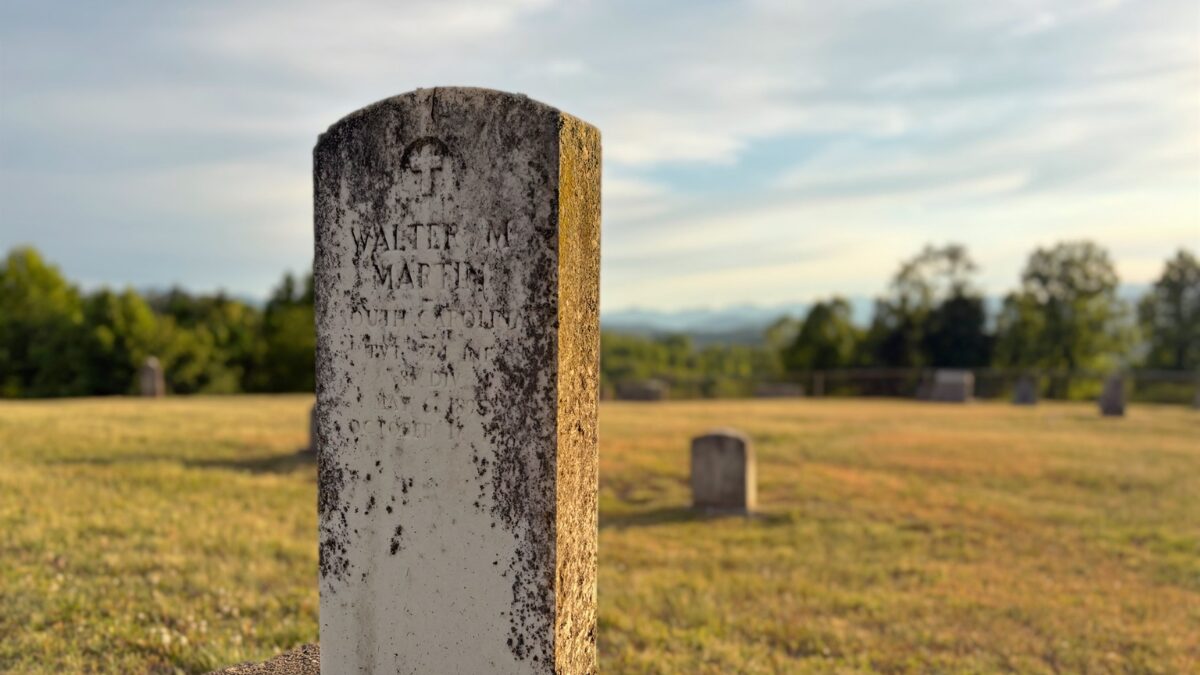
Walter Martin died in France during World War I and remained buried overseas for nearly three years before his remains were returned to Buncombe County.
-
Tombstone Tales: Deadly 1889 camp meeting in Buncombe County
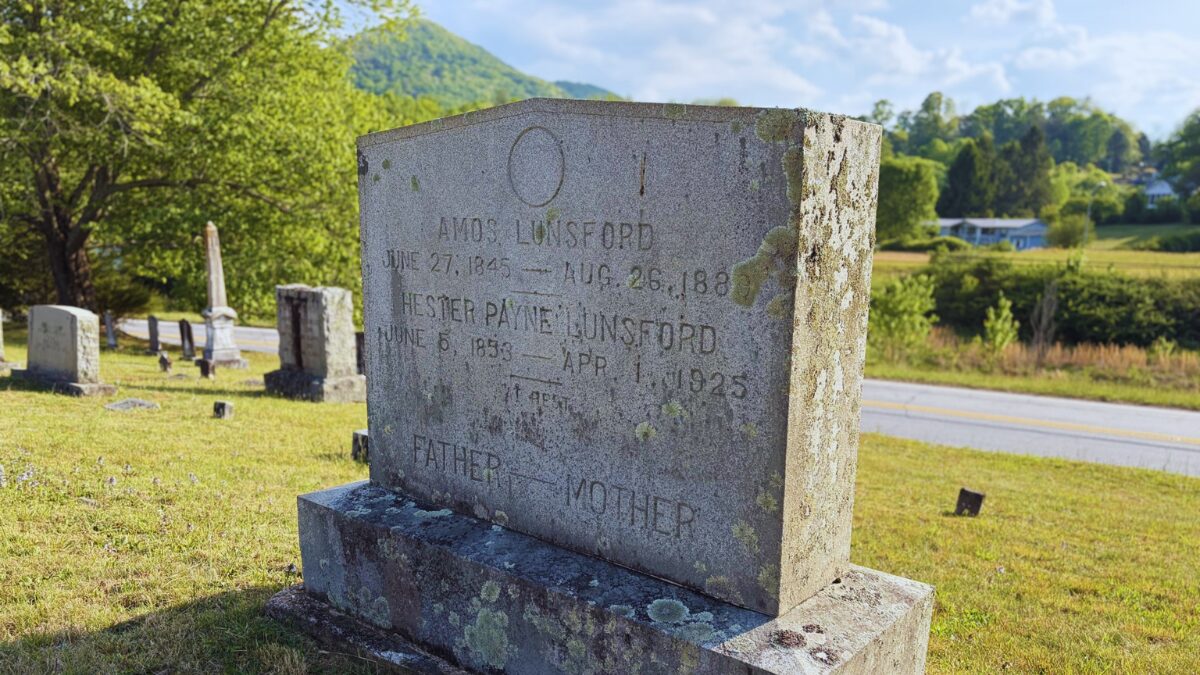
A violent confrontation at a Turkey Creek camp meeting led to a death and a murder trial in Buncombe County.
-
Tombstone Tales: Ella Morrison shaped Asheville institutions
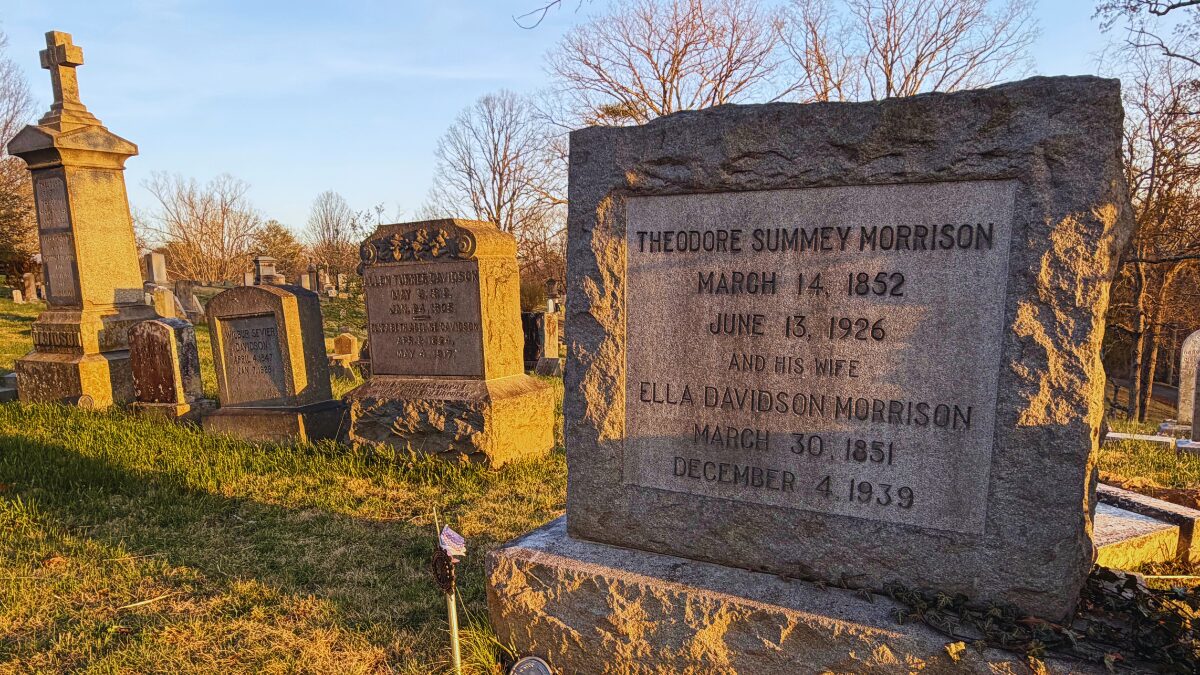
Buried at Riverside Cemetery, Ella Morrison left a lasting mark on Asheville’s civic life.